Tick Removal Services by Pest Control Xperts in Novato
Serving homes, apartments, dormitories, hotels, and healthcare offices throughout Novato, Inverness, California, and Surrounding Areas
Tick Control & Yard Treatment in Novato, California
Professional Ticks Control for Novato, San Rafael & Petaluma: Eliminating the Disease Risk in Your Yard
You return from a hike near **Mount Burdell** or simply let your dog play in the backyard, only to find a tiny, black speck embedded in the skin. The immediate fear of disease, particularly **Lyme disease** is overwhelming. You remove the visible pest, but what about the invisible population hiding in your yard’s dense shrubbery and **leaf litter**? Your attempts at boundary spraying provided a temporary **illusion of control undone by the hidden life cycle** of ticks and the constant migration of wild hosts. For property owners in **Novato, California**, and nearby towns like **San Rafael**, **Petaluma**, **Hamilton**, and **Ignacio**, aggressive, targeted **Ticks control** is a mandatory part of protecting health and securing outdoor living. At **Novato Pest Control Xperts**, we bring the **expertise** to eliminate ticks from your environment, securing your property against these dangerous external parasites.
Why Ticks Appear in Novato and Surrounding Communities
**Ticks infestation** is primarily driven by Marin County’s unique blend of lush vegetation, moisture, and high wildlife movement, making our area a perfect habitat for the **Western Blacklegged Tick**.
Local Climate and Geographical Triggers
- Year-Round Activity: Ticks are active all year in Marin County due to the mild climate. Adult ticks are most active in the **fall and winter (October to March)**, while the tiny, high-risk **nymph stage** is active in **spring and early summer (March to August)**. This means the risk of contracting **Lyme disease** is constant, demanding **seasonal pest control**.
- Woodland and Chaparral Habitat: Ticks thrive in the dense oak woodlands, chaparral, and brushy hillsides surrounding **Novato** and **San Rafael**. They are found in **leaf litter**, on **logs**, and on tall grass along hiking **trails** and property perimeters.
- Moisture Requirement: Ticks require moisture to prevent desiccation. The cooler, wet winters and high humidity near **Rush Creek** and the marshy areas of East **Novato** create ideal conditions for tick survival and development.
Architecture and Infestation Vulnerabilities
- The Urban-Wildland Interface: Homes in neighborhoods like **San Marin** and **Ignacio** that abut the **Mount Burdell Open Space Preserve** or dense oak groves are at the highest risk. Wildlife hosts (**rodents**, deer) constantly introduce ticks directly into the yard perimeter, using landscaping as a bridge.
- Landscape Harborages: Decorative landscaping, dense, unmaintained shrubs, **woodpiles**, and **leaf litter** near the house provide the dark, sheltered, moist habitats where ticks wait (quest) for a host. Ticks rarely travel far; they are introduced by hosts and stay put.
- Domestic Introduction: While ticks do not form “colonies” inside, they are often introduced into homes in **Petaluma** and **Novato** via pets. The **Brown Dog Tick** is a species that can survive and breed indoors in cracks and crevices, requiring specific interior **extermination**.
Identifying the Tick Threat in the North Bay Region
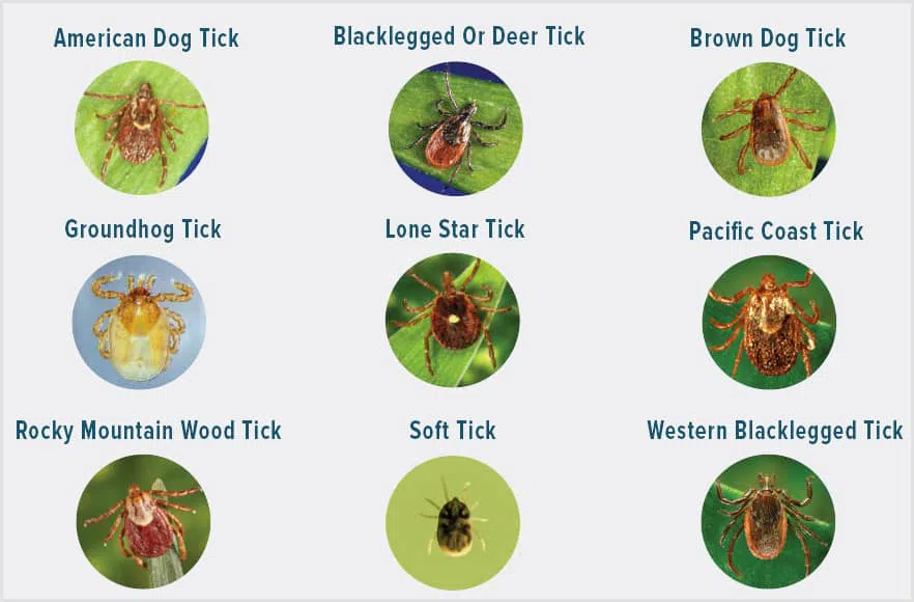
There are no pests known as “carpenter ticks.” The primary concern for **Ticks control** is the presence of the disease-carrying **Western Blacklegged Tick** and the various disease threats they carry.
Western Blacklegged Tick (*Ixodes pacificus*)
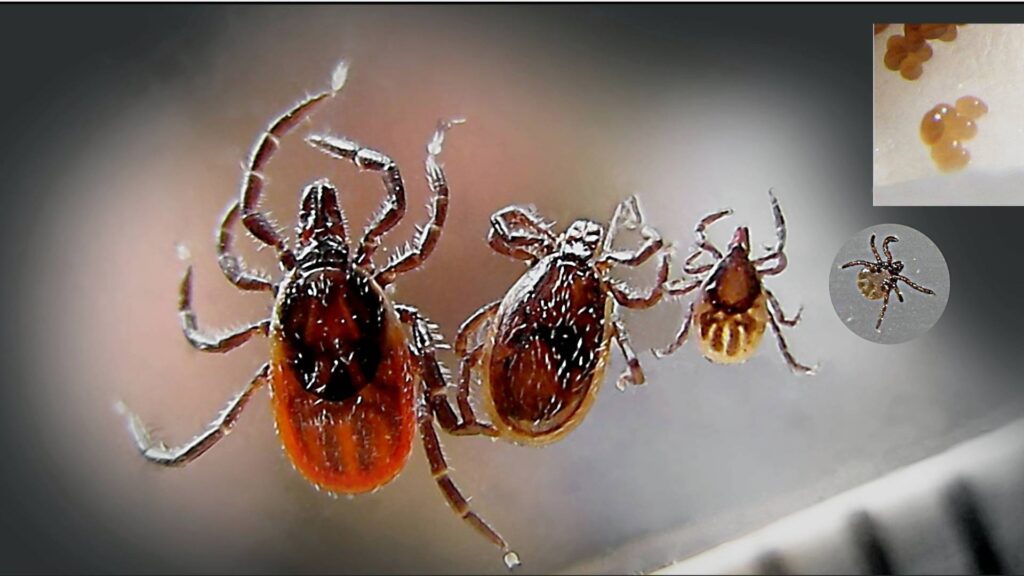
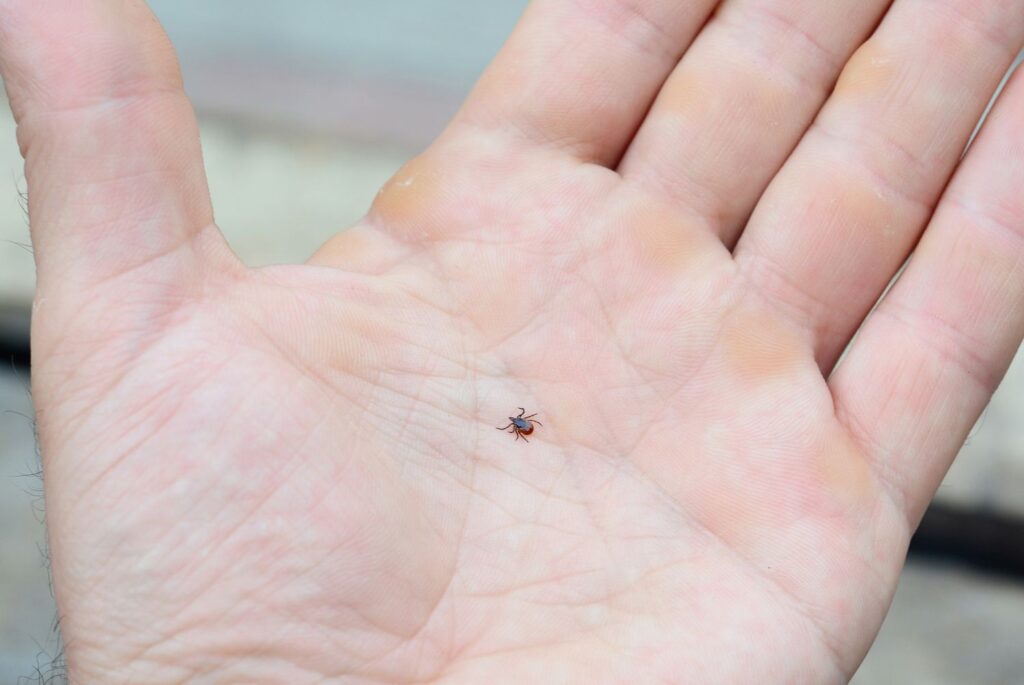
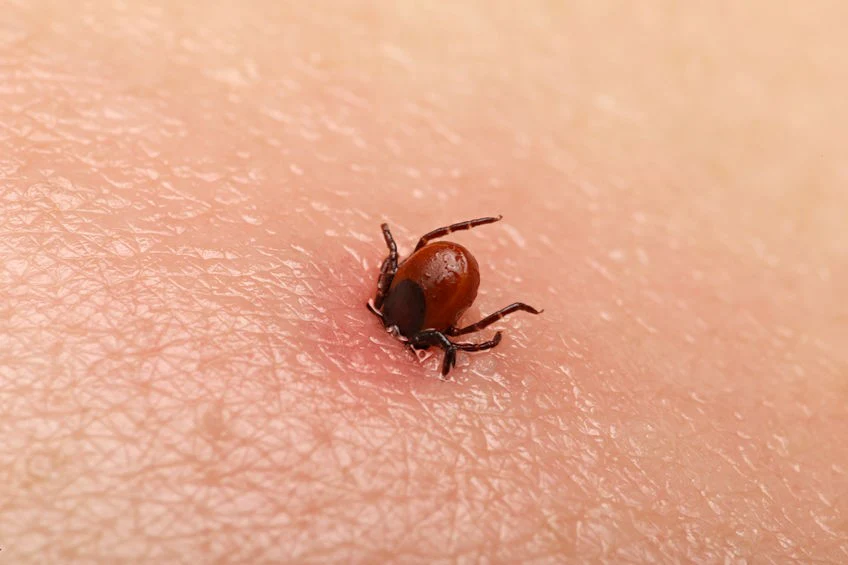
- Identification: The most critical tick. Nymphs are tiny (poppy seed size), hard to spot, and active in the summer. Adults are reddish-brown with a dark dorsal shield (scutum).
- **Risk:** The primary vector for **Lyme disease** and **Anaplasmosis** in California. **Ticks control** must focus on eliminating the **nymph stage** due to its size and peak season activity.
Other Common Species in Marin County
- **Pacific Coast Tick (*Dermacentor occidentalis*)**: Found predominantly in shrub-lands and along **trails**. A vector for **Rocky Mountain Spotted Fever** and **Tularemia**.
- **American Dog Tick (*Dermacentor variabilis*)**: Also found in brushy areas along the coastal ranges. A vector for **Rocky Mountain Spotted Fever** and **Tularemia**.
Problems Ticks Create for Homes and Businesses
An established tick population in your yard is a direct health liability that demands immediate **Ticks exterminator** action and proactive **pest control for Ticks**.
- **Lyme Disease Risk:** The most serious threat posed by **Western Blacklegged Ticks** is the transmission of the bacteria that causes **Lyme disease**. Prompt removal within 24 hours can reduce the risk of infection, but elimination of the outdoor population is the best defense.
- **Other Tick-Borne Diseases:** Ticks are vectors for several other serious illnesses, including **Anaplasmosis**, **Tularemia**, and **Rocky Mountain Spotted Fever**, all of which require prompt medical attention if symptoms arise after a **flea bites** (mistakenly believed to be a flea bite) or a tick attachment.
- **Pet Illness and Discomfort:** Ticks cause severe discomfort, skin irritation, and can transmit diseases to pets, necessitating continuous veterinary-recommended preventative products.
- **Loss of Outdoor Enjoyment:** A **Ticks infestation** on your property forces a reduction in outdoor activities, particularly near wooded perimeters, greatly diminishing the **experience** of your **Novato** home.
Signs of an Escalating Ticks Infestation
**What are the signs of a major Ticks infestation?** Because ticks do not leave easily visible **frass** or **droppings** like insects, the signs of a yard problem are related to host contact and environmental confirmation.
- Finding Attached Ticks: Finding multiple ticks attached to humans or pets after spending time in your yard or on your adjacent property is the clearest indicator of a population problem. **Nymphs** are tiny, often missed, and highly dangerous.
- Increased Wildlife Activity: An increase in deer, **rodents**, or stray animals on your property suggests an increased transfer of ticks into your landscape.
- **Tick Dragging Test:** Walking through suspected areas of tall grass or dense brush in your yard with a white cloth or white socks. Ticks will quest on the fabric, providing visual confirmation of a severe **Ticks infestation** that requires **Ticks removal**.
- Unexplained Bites: Repeated, unexplained bites on ankles and lower legs, often during the cooler months, may signal an emerging population in your yard, requiring professional **Ticks inspection**.
Why Professional Extermination is Essential for Ticks Removal
The tick life cycle is complex, defined by movement and resilience in the environment. Your attempts at yard spraying are a temporary **illusion of control undone by the hidden life cycle** and the surrounding untreatable habitat.
The Fatal Flaw of DIY Ticks Control
- Not Eliminating Habitat: Ticks thrive in the **transition zone** between your lawn and the wooded areas. Homeowners often treat the open lawn, neglecting the critical periphery of dense brush, **leaf litter**, and perimeter barriers where 90% of ticks are found.
- Missing the Life Stages: DIY products often lack the long-lasting residual action necessary to kill all three life stages (larva, **nymph stage**, and adult) and the long incubation period of the tick life cycle. Killing the adults does nothing to stop the hidden **nymphs** that hatch months later.
- Constant Reintroduction: Ticks are not endemic to your lawn; they are constantly reintroduced by wildlife hosts. Without a comprehensive perimeter barrier and management of wildlife attractants, your yard becomes re-infested immediately after your spray wears off.
- **Long-Tail Answer:** **Are carpenter ticks a serious threat to my home?** There are no “carpenter ticks,” but the **Western Blacklegged Tick** is a serious, disease-carrying parasite whose threat requires professional habitat modification and perimeter **professional Ticks treatment**.
The Professional IPM Solution: Habitat Reduction and Barrier Treatment
**Novato Pest Control Xperts** utilizes a systematic, **Integrated Pest Management (IPM)** approach that focuses on reducing tick habitat and applying targeted, barrier treatments for long-term **Ticks removal**.
- **Targeted Perimeter Treatment:** We apply long-lasting residual products to the critical areas where ticks live: the three-foot band of **leaf litter**, **woodpiles**, perimeter fencing, and dense shrubbery. This eliminates the established tick population.
- **Habitat Modification:** Our **expertise** includes providing crucial advice on **exclusion techniques** through landscaping: clearing **leaf litter**, trimming low-hanging branches, and creating **gravel or wood chip barriers** between the lawn and wooded areas. This physically reduces the suitable tick habitat for **Ticks infestation**.
- **Focus on Nymphs:** We tailor our **professional Ticks treatment** schedule to target the active **nymph stage** (spring/early summer) to eliminate the life stage most likely to transmit **Lyme disease**, ensuring high effectiveness for **Ticks exterminator** service.
- **Long-Tail Answer:** **Why do I keep getting ticks in my house?** Because you have unmanaged perimeter habitats (**leaf litter**, tall grass) near the structure, allowing ticks to latch onto a pet or person who then carries them inside. Professional service eliminates this exterior source.
Our Ticks Removal Method: A Strategic, Safe Process
Our method for **Ticks control** is systemic and built on local **experience** to ensure a definitive, **environmentally friendly pest control** solution for your yard and home.
Step 1: Ticks Inspection and Risk Area Assessment
Our service begins with a detailed **Ticks inspection** of your outdoor environment in **Novato** or **Petaluma**. We utilize methods like the white cloth drag to identify all high-risk zones: dense vegetation, stone walls, **woodpiles**, and areas of high **rodent** activity, which are major carriers of **Western Blacklegged Ticks**.
Step 2: Habitat Modification and Exclusion Techniques
We work with you to implement **exclusion techniques** and habitat modifications. This involves clearing **leaf litter**, removing tall grasses, and creating a clear, dry barrier between your managed lawn and the wildland interface to reduce suitable tick harborage.
Step 3: Targeted Barrier Treatment and Life Cycle Elimination
We apply targeted **professional Ticks treatment** to the high-risk perimeter, focusing on the interface where **rodents** and other hosts enter the yard. This application targets all active life stages and provides a persistent barrier against newly introduced ticks.
Step 4: Monitoring and Seasonal Pest Prevention
We establish a monitoring schedule, particularly during the peak **nymph season**, to verify the success of the treatment and ensure **Ticks prevention** remains effective. We provide continuous guidance on personal protection and concurrent pet treatment.
Why Novato Relies on Pest Control Xperts
We are the North Bay’s premier authority for **Ticks control**. Our **expertise** is rooted in understanding the regional threat of the **Western Blacklegged Tick** and the habitat pressures of our urban-wildland environment. We provide **trustworthiness** by focusing on habitat reduction and targeted treatment, ensuring a safer yard for your family and pets. Our systematic approach provides a definitive solution to your **Ticks infestation**.
Do not risk the severe health threats of **Lyme disease** or other tick-borne illnesses. That stray tick you found is a warning that your property is a host-seeking environment. Your past efforts at **Ticks removal** have been an **illusion of control undone by the hidden population** in the surrounding brush and **leaf litter**. **Novato Pest Control Xperts** is ready to apply the specialized **expertise** and the definitive **professional Ticks treatment** required to **get rid of Ticks** and secure your outdoor life. Contact a pest control professional for a thorough inspection today.
Service Area Reminder: We proudly serve **Ticks control** clients throughout **Novato**, **San Rafael**, **Petaluma**, **Hamilton**, and **Ignacio**. The relevant zip codes include 94945, 94947, 94949, 94901, and 94954.
Related Topics in Ticks Control
The Unseen Danger: Lyme Disease and Western Blacklegged Tick Nymphs
The most significant threat to humans is the **nymph stage** of the **Western Blacklegged Tick**, which is active in spring and summer. **Nymphs** are tiny, often missed, and statistically the most likely stage to transmit **Lyme disease**. Our **professional Ticks treatment** is timed specifically to target this critical nymphal period, maximizing the effectiveness of **Ticks exterminator** services in high-risk wooded areas.
Ticks Control for Pets: The Essential Need for Veterinary Partnership
**Ticks control** in the home and yard is only half the battle. Adult ticks and **nymphs** primarily feed on hosts, meaning your pets are constantly bringing them onto your property. We emphasize that successful **Ticks removal** requires concurrent, veterinarian-recommended oral or topical products for your pets to kill ticks before they can drop off and establish an **infestation** in the yard, ensuring a complete solution.
Habitat Modification: The Ultimate Exclusion Techniques for Ticks
Ticks are low-mobility pests that wait for a host. The most permanent **Ticks prevention** involves structural landscaping changes. This includes creating **gravel or wood chip barriers** between wooded areas and manicured lawns, removing **leaf litter**, and keeping **woodpiles** elevated and away from the house. These **exclusion techniques** dry out the ticks’ preferred moist environment, making the habitat unsuitable for a **Ticks infestation**.
San Rafael’s High-Risk Zones: Trails, Woodpiles, and Leaf Litter
Due to the numerous oak woodlands and hiking **trails** around **Novato** and **San Rafael**, ticks are common on **logs**, rocks, and **leaf litter** along pathways. Our **Ticks inspection** targets these areas, as well as the transition zones in your yard. We recommend immediately showering and drying clothes on high heat after spending time in these high-risk areas, a simple but essential personal **Ticks prevention** measure.
Ticks Inspection: Using the White Cloth Dragging Method
Ticks are not attracted to bait. Our **Ticks exterminator** **expertise** utilizes techniques like the white cloth or “dragging” method during **Ticks inspection** to physically survey high-risk areas of the yard. This involves dragging a white fabric square over dense brush and **leaf litter** to confirm the presence of **Ticks infestation** before applying **professional Ticks treatment**, ensuring treatments are targeted precisely where the pest population is established.
Pest Control for Ticks: Why Residual Treatments are Necessary
Because the tick life cycle can take months or years to complete, **pest control for Ticks** requires a long-lasting residual **professional Ticks treatment**. Our materials are formulated to persist in the environment, eliminating ticks that hatch or are newly introduced by **rodents** or other wildlife hosts weeks after the initial application, providing the necessary **trustworthiness** for long-term **Ticks control**.